
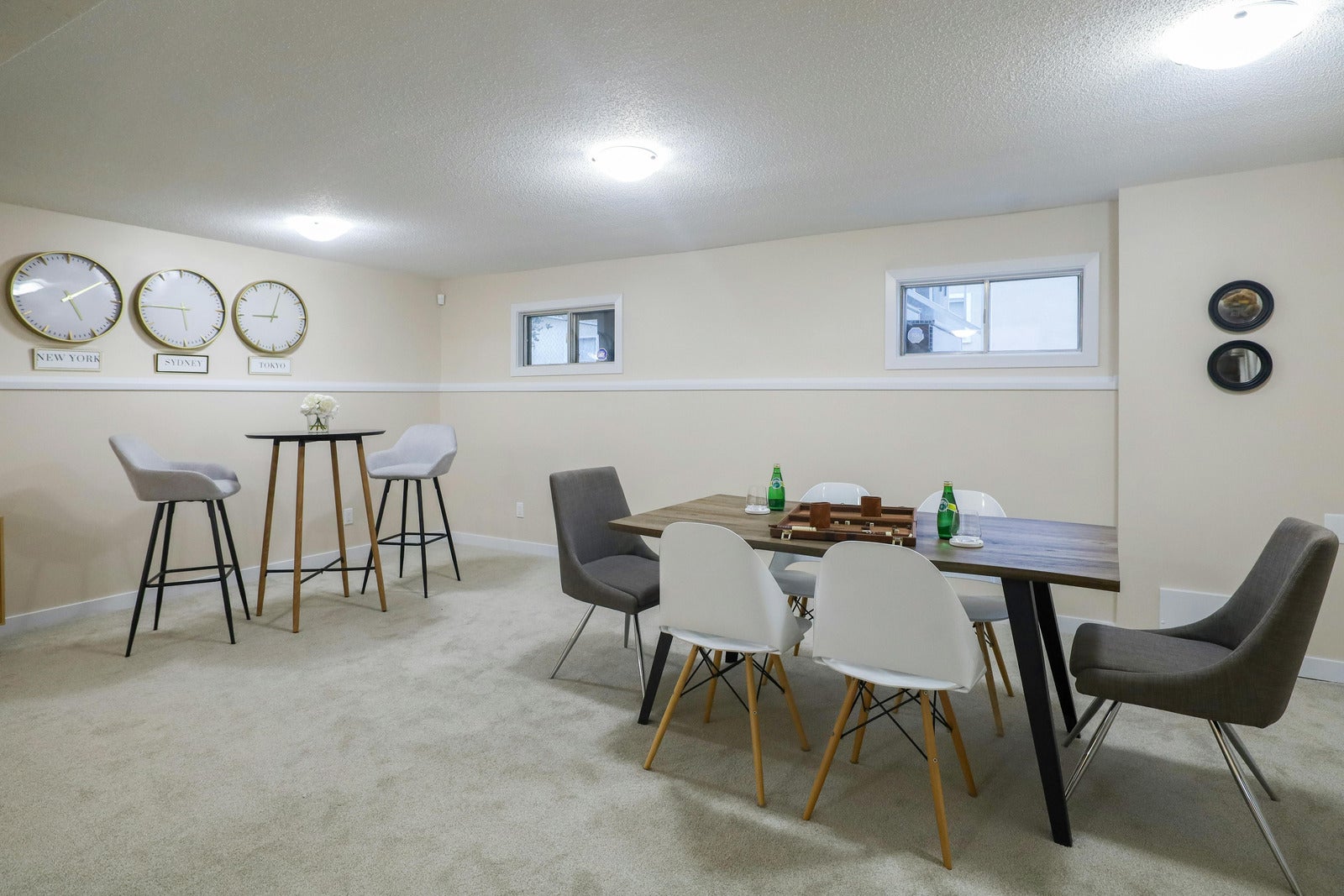
Most homeowners look at a cramped basement and see a problem. Low ceilings, awkward layouts, support columns in inconvenient spots, utility equipment taking up a third of the floor. The instinct is to leave it alone and keep using it as a dumping ground for things that don’t fit anywhere else. That’s a shame, because small basement renovations done with some actual thought behind them can add usable square footage that changes how a home functions day to day. The key word is thought. A cramped basement that gets finished without a plan just becomes an expensive cramped basement. The ones that turn out well start with honest decisions about what the space can realistically become. This covers the ideas that hold up in practice, the design moves that make small spaces feel bigger, what the work realistically costs, and where homeowners tend to go wrong.
First, Be Honest About What the Space Can Do
Not every basement can be everything. That’s the first conversation worth having, and most people skip it in favour of Pinterest boards and contractor quotes. Ceiling height is usually the limiting factor. Under 7 feet makes most finished uses uncomfortable. Under 6.5 feet starts ruling things out; some building codes won’t permit habitable space below certain heights, and for good reason. The space that felt fine as a utility room feels oppressive when it’s framed out, drywalled, and lit with flat overhead fixtures. Column placement matters too. An open-plan small basement with columns every 10 feet doesn’t stay open-plan once furniture goes in. Same with mechanicals, the furnace, water heater, and electrical panel need to stay accessible and code-compliant, and working around them often shapes the entire basement layout ideas conversation more than people expect. Truth be told, a realistic assessment of the space before any planning starts saves significant money and frustration later.
The Layouts That Work in Small Basements
Small doesn’t mean there’s only one option. A few basement remodeling ideas come up consistently for tight footprints and each one fits different household needs. Single-purpose rooms tend to work best in smaller footprints. A dedicated home office. A compact gym. A kids’ playroom. A laundry and storage room that’s actually functional rather than just chaotic. Trying to make a small basement into a multi-purpose entertainment space, home office, and guest room simultaneously usually results in none of those working particularly well.
A home office is probably the most requested use right now, and it suits basements well, naturally quieter than the upper floors, separate from the main living areas, and the lower natural light is less of an issue for a workspace than it is for a living room. Compact gym conversions are popular too. Rubber flooring, wall-mounted mirrors, minimal equipment. The low ceiling that rules out a comfortable bedroom doesn’t bother a home gym at all; nobody’s standing on a treadmill. This is genuinely one of the best uses for a basement with ceiling height constraints. For families with kids, a playroom conversion is practical in a way that most other uses aren’t. Noise travels down instead of through walls to bedrooms. Mess stays contained in one place. And the finishes don’t need to be precious which means costs stay lower.
Small Basement Design: Making the Space Feel Bigger
There’s a real toolkit for this. Some of it costs money, some of it is just decisions made at the right point in the planning process. Ceiling treatment is the biggest lever. Exposed ceilings where the joists and mechanicals are painted out in a dark colour rather than hidden behind drywall are genuinely useful in small basement design. They eliminate the drop ceiling that makes everything feel lower, and when done well they read as intentional rather than unfinished. Black or dark grey paint on joists and mechanicals, combined with track or pendant lighting, works better in a lot of tight basements than a traditional drywall ceiling ever would. Lighting matters enormously.
Recessed lighting requires ceiling depth that a lot of basements don’t have. Wall sconces, track lighting, LED strips along shelving or toe kicks distribute light without stealing ceiling height. A basement that feels dim and low with overhead fixtures only can feel completely different with layered lighting at different heights. Pale walls, large-format flooring tiles or planks running lengthwise, and mirrors on at least one wall are the standard small-space moves and they work for the same reason they work everywhere else. Horizontal lines read as width. Reflective surfaces read as depth. Nothing revolutionary, but the fundamentals are fundamentals for a reason. Built-in storage is worth whatever it costs in a small basement. Floating shelving, built-in cabinetry, under-stair storage if there’s a staircase, anything that uses wall space rather than floor space keeps the footprint feeling open. Freestanding furniture in a small basement eats square footage quickly.
Space-Saving Solutions That Actually Get Used
There’s a gap between space-saving basement solutions that look good in a showroom and ones that function well after six months of real use. The ones that tend to stick:
- Murphy beds with integrated shelving useful for occasional guest accommodation without dedicating floor space to a permanent bed
- Fold-down desks genuinely useful in home office conversions where the space also needs to serve another purpose sometimes
- Sliding doors instead of swing doors recovers 6 to 8 square feet of clearance space that a standard door requires
- Ceiling-mounted storage systems in utility areas, keeps floor space clear without losing storage capacity
- Window well enlargement not exactly furniture, but adding or enlarging window wells brings in natural light and can change building code classification of the space entirely
The ones that don’t work as well in practice: furniture that requires reconfiguration to switch uses (too much friction), wet bars that don’t get used because the basement isn’t really an entertainment space, and home theatre setups in rooms where the sight lines don’t work.
Basement Finishing: What’s Actually Involved
People underestimate how much goes into basement finishing before anything decorative happens. Moisture mitigation first always. Framing, insulation, vapour barrier. Electrical rough-in and any plumbing if a bathroom or wet bar is in the plan. HVAC extension or supplemental heating. Then drywall, flooring, trim, fixtures. Each of those phases has a cost and timeline attached. The projects that run long and over budget are almost always the ones where the pre-finishing work uncovered something: a moisture problem that needed addressing, electrical that wasn’t up to code, a floor that wasn’t level enough for the planned flooring. Building permits are required for most basement finishing work that changes the use of the space. Skipping permits saves a few weeks upfront and creates real problems at resale, buyers’ home inspectors flag unpermitted work, and it can complicate or kill a sale. Worth doing it right.
What Small Basement Renovations Actually Cost
Compact basement upgrades vary considerably by scope, but rough ranges give a starting point.
- Basic finishing, framing, drywall, flooring, paint, basic lighting: $25,000 to $50,000 for a small footprint
- Mid-range renovation with bathroom rough-in and built-ins: $50,000 to $80,000
- High-finish renovation with full bathroom, custom millwork, premium flooring: $80,000 to $120,000+
Those numbers assume the moisture and structural work is already sorted. If it isn’t, if the basement needs waterproofing or foundation work before finishing can begin that’s a separate budget item before any of the above. The return on investment for a finished basement in most Canadian markets runs between 50 and 75 cents on the dollar at resale. Not a dollar-for-dollar return, but a finished basement adds square footage to the home’s usable area, which affects valuation, buyer interest, and time on market.
Finding the Right Basement Renovation Contractors
This part matters as much as the design decisions. Basement renovation contractors who specialize in smaller, finished basement work are worth seeking out specifically. General contractors who mostly do additions or whole-home renovations sometimes underestimate the specific challenges of small basement work ceiling constraints, moisture management, making tight layouts feel intentional rather than just small. Ask for references from finished basement projects specifically not kitchen renovations or additions.
Verify that permits were pulled on past projects. Get a detailed scope of work in writing, not a one-line quote. Ask how they handle moisture issues if they turn up mid-project because that answer tells a lot about whether they actually know basements or are just treating it like any other room. Three quotes minimum. Not to find the cheapest to understand what the job actually involves and where the ranges come from. Sometimes quotes vary because the scope varies, and that’s worth understanding before any decision is made.
Questions People Ask About Small Basement Renovations
How do I renovate a small basement?
Start with moisture and structure before anything decorative. Then commit to one primary use rather than trying to make a small space do everything. Good small basement design exposed ceilings, layered lighting, built-in storage, pale finishes does more for a tight footprint than square footage alone. Pull permits. Hire basement renovation contractors with finished basement experience specifically, not just general renovation backgrounds.
What are the best ideas for small basement spaces?
Home offices, compact gyms, and dedicated kids’ playrooms are consistently the best fits for tight footprints. Each uses the space without fighting its constraints. Space-saving basement solutions like Murphy beds, fold-down desks, sliding doors, and built-in shelving keep floor space usable. The best basement remodeling ideas for small spaces commit to function over trying to make the space look bigger than it is.
How much does a small basement renovation cost?
Basic basement finishing on a small footprint runs roughly $25,000 to $50,000. Mid-range renovations with a bathroom land between $50,000 and $80,000. High-finish projects with custom millwork and premium materials go $80,000 to $120,000 or beyond. Budget separately for waterproofing or structural work if needed; that’s a prerequisite, not part of the finishing cost.
Is finishing a small basement worth it?
Generally yes, finished basements return 50 to 75 percent of renovation cost at resale in most Canadian markets, plus meaningfully improve day-to-day livability. Compact basement upgrades that serve a clear function, home office, gym, playroom add real usable square footage. The ones that struggle to justify cost are poorly planned multi-use layouts that end up not working well for anything.
