
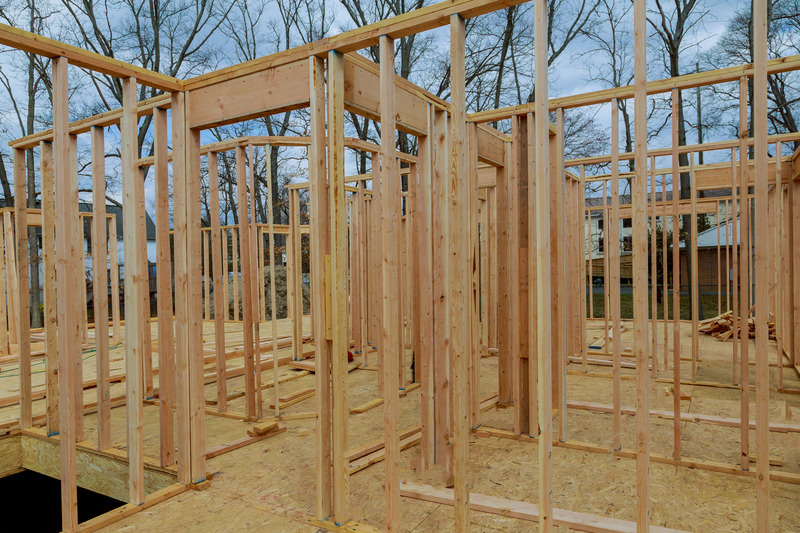
The Part Nobody Talks About Enough
Construction framing contractors don’t get the credit they deserve. Walk into any newly built home and people gush over the countertops, the lighting, maybe the flooring. Nobody stops to think about the wall assembly holding the whole thing up. But they should. Because here’s the thing get the frame wrong and none of the pretty stuff matters. Doors won’t sit right. Floors start to bounce. Cracks show up in drywall that wasn’t supposed to crack. And by the time those symptoms appear, fixing them is expensive and disruptive. This post covers what construction framing contractors actually do, why the framing phase carries more weight than most people realize, and what separates a good framing crew from one that’ll cost you money later. New build or gut renovation same rules apply.
So What Do Framing Contractors Actually Do?
Short answer: they build the skeleton. Everything else insulation, drywall, plumbing, electrical gets attached to or runs through the frame. So if the frame is off, everything downstream is off too.
Structural framing services go way beyond just stacking lumber. A proper framing crew reads structural drawings, calculates load paths, sizes headers correctly over openings, and sequences the work so the structure goes up plumb, level, and square. That last part sounds basic. It’s not.
On a standard residential project, residential framing contractors typically handle:
- Floor systems ā€” joists, rim boards, subfloor sheathing
- Exterior wall framing ā€” plates, studs, corners, sheathing
- Interior partition walls, including load-bearing ones
- Roof system ā€” trusses or stick-framed rafters
- All rough openings for windows, doors, stairs
Commercial work adds complexity taller structures, engineered steel connections, stricter inspections. But the core responsibility is identical: build a frame that holds up under real-world load conditions. For decades.
Wood Framing Construction: Why It’s Still Dominant
Wood framing construction has been the go-to method for residential construction in North America for well over 100 years. That’s not tradition for tradition’s sake. Wood is strong relative to its weight, widely available, easy to cut and fasten, and it handles the thermal and moisture cycling of most climates reasonably well. Platform framing where each floor is built as its own level, walls rising on top of the platform below is what most house framing experts work with day in and day out. It’s efficient, it’s well understood by inspectors and trades, and it gives a lot of flexibility for different floor plans. Steel framing shows up more in commercial applications and in coastal or termite-prone regions where wood’s vulnerabilities become real liabilities. An experienced contractor will tell a client straight up what material makes sense for their specific project. Climate, budget, local code, and building type all factor in. Worth knowing: lumber and framing labor together can represent 15ā€“20% of total new home construction costs, per the National Association of Home Builders. That’s a significant slice. Which makes it a really bad place to cut corners.
Framing for Renovations: A Different Animal
Framing for renovations is messier than new construction. There’s no clean slate. There’s an existing structure, some of it built to code, some of it not, some of it just… improvised by whoever worked on the house decades ago. Open up walls in a house from the 70s or 80s and the surprises pile up fast. Joists notched for plumbing runs with no reinforcement. Headers that were never actually installed over windows. Studs in the wrong places because someone ran a duct and just worked around it. None of that shows up on any drawing. The trickiest part of renovation framing is almost always load-bearing wall framing. Homeowners see a wall they want gone. A contractor who doesn’t assess that wall properly figure out what it’s carrying and where that load needs to go can create a structural problem that takes years to fully show itself. Undersized beam. Post with no bearing below it. The load finds a way, and it’s usually not pretty.
A decent renovation framing contractor handles this stuff before swinging a hammer:
- Identifies load-bearing elements from the structure, not just guessing
- Brings in a structural engineer when the scope warrants it
- Reinforces openings to current code,Ā not the code from when the house was built
- Flags surprises in writing and gets sign-off before proceeding
That last one matters more than people think. Hidden problems mid-renovation are where budgets blow up.
Framing Inspections: Not Optional, Not a Formality
Framing inspection services exist for a reason. Before insulation goes in and walls get closed up, a building inspector reviews the rough framing. They’re checking nailing patterns, header sizes, structural connections, fire blocking, and code compliance. Miss that inspection window and the wall has to come back open. Simple as that. Beyond the municipal inspection, smart owners and general contractors sometimes bring in an independent third-party inspector too. Not because they don’t trust the crew but because a fresh set of eyes with no stake in the outcome catches things that get missed when everyone’s in a rush to hit schedule. Good building structure contractors don’t flinch at this. They welcome it. A framing crew that gets defensive when someone wants to inspect the work is a crew worth being skeptical of. Catching a missed connection or an undersized header before drywall is a half-hour fix. Catching it six months later is a gut job. The math on framing inspection services is pretty simple.
Picking the Right Contractor: What to Actually Look At
The market has good framing crews and bad ones. Here’s what actually separates them:
- License and insurance, first. Any legitimate construction framing contractor carries general liability and workers’ comp. Ask for certificates before the conversation gets serious. No certificates, no contract.
- Relevant project experience. A crew that’s great at tract housing may struggle with a complex custom home or a mixed-use commercial build. Ask specifically about projects that look like the current one ā€” size, type, complexity.
- References that can be called. Not just names on a list. Talk to past clients. Ask what went wrong and how the contractor handled it. That’s the real question ā€” because something always comes up.
- Written scope and documentation. Vague verbal agreements are where disputes are born. A contractor worth hiring puts the scope, specs, timeline, and payment schedule in writing before work starts.
- Local code knowledge. Seismic zones, wind exposure categories, energy codes, fire-rated assembly requirements ā€” these vary by jurisdiction. A framing crew working regularly in the area knows the local requirements without having to look them up mid-project.
What Bad Framing Actually Costs
This part doesn’t get said plainly enough: framing mistakes are the most expensive kind to fix. A wall that’s a quarter-inch out of plumb, caught at rough framing stage? Fixed in twenty minutes. That same wall, discovered after tile is set and cabinets are hung? That’s a tear-out, a reframe, a retile, new cabinets, and a very tense conversation about who’s paying for it. Structural defects many of which trace back to framing are consistently among the top categories of construction claims and litigation. The National Association of Home Builders has flagged this repeatedly. It’s not a rare problem. It’s a predictable one, and it’s almost always tied to either unqualified labor or cost-cutting in a phase that can’t afford to be cut. Hiring qualified house framing experts up front costs more than hiring whoever’s cheapest. It costs less than fixing what the cheap crew left behind.
Frequently Asked Questions
How much does framing cost for a house?
Expect to pay roughly $7 to $16 per square foot for framing, depending on region, design complexity, and current lumber prices. A 2,000 sq ft home might run $14,000 to $32,000 for framing labor and materials combined. Custom rooflines, open floor plans, and multi-story builds all push costs toward the higher end.
How long does framing take in construction?
A typical single-family home takes one to three weeks with a full crew on site. Bigger or more complex projects take longer. Weather, material lead times, and design changes all affect the timeline. Commercial or multi-story projects are scoped individually; there's no one-size answer for those.
Why is framing important in building?
The frame determines how loads move through the structure from the roof, down through walls, into the foundation. A properly framed building handles wind, seismic forces, and the weight of occupants and finishes without issue. Poor framing shows up later as bouncy floors, cracked drywall, sticky doors, and in bad cases, actual structural failure.
