
Ottawa Winters Are Hard on Wood. There’s a Better Option.
Wood decks in Ottawa have a rough life. Freeze-thaw cycles every spring. Ice and snow sitting on boards for months. UV bake all summer. By year seven or eight, most pressure-treated decks are warping, splitting, or rotting at the ledger. That’s the cycle most homeowners know. Composite Decking Ottawa breaks it. The material handles what Ottawa winters actually throw at it and it does it without annual sanding, staining, or sealing.
This isn’t a sales pitch for one product. It’s a straight look at what composite decking is, what it costs in this market, how it stacks up against pressure-treated wood, and what to ask before hiring anyone to install it. Because the material only performs as well as the installation underneath it. Whether the project is a ground-level patio deck or a second-storey addition to a Kanata or Barrhaven home, the same questions apply. This post answers them without the runaround.
What Composite Decking Actually Is and Isn’t
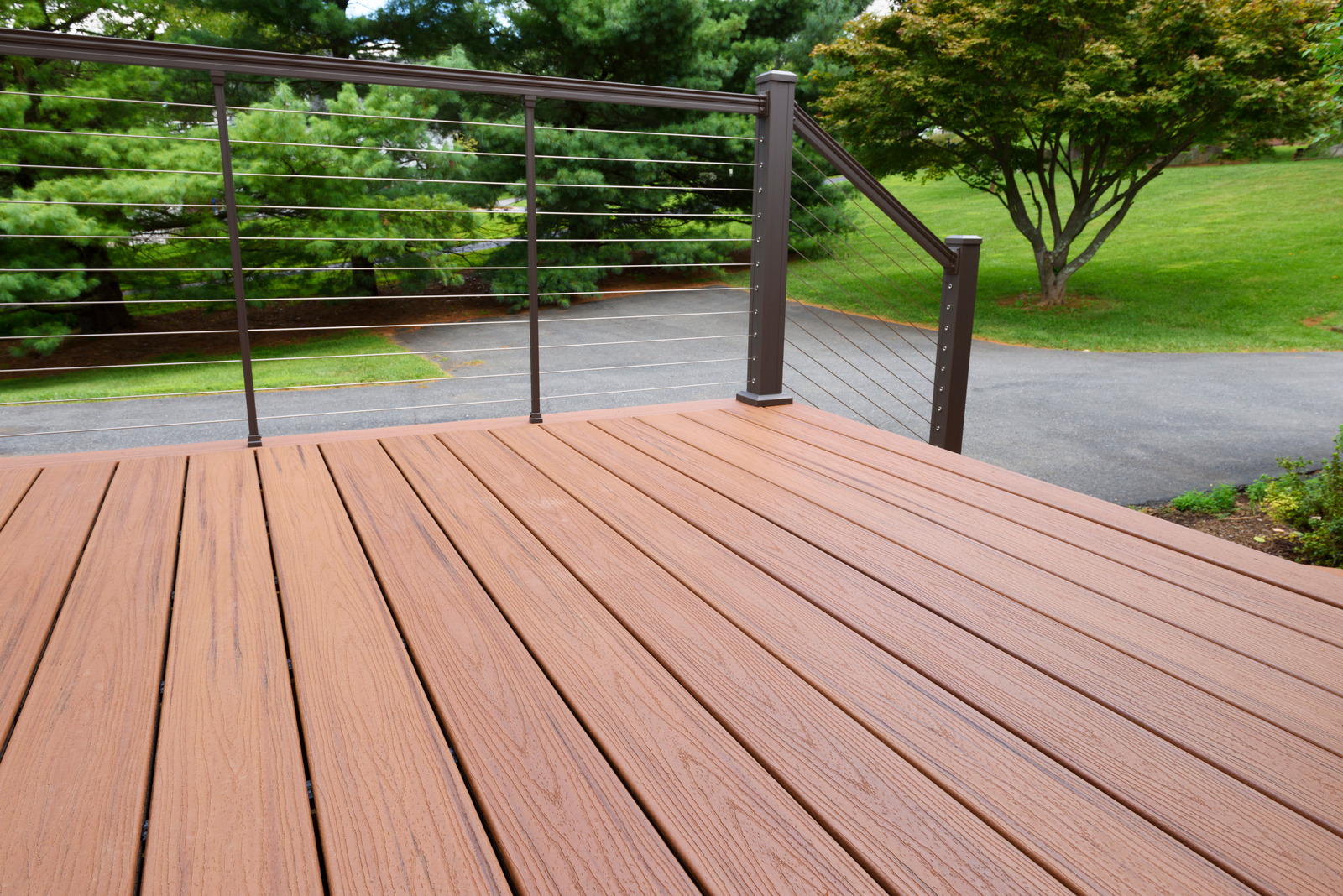
Composite decking is made from a blend of wood fibre and recycled plastic, bound together under heat and pressure. The ratio and manufacturing process varies by brand. Higher-end products Trex, Fiberon, TimberTech cap the board with a protective polymer shell that resists staining, scratching, and moisture absorption far better than uncapped composites. Lower-end products skip the cap layer and perform noticeably worse over time.
It’s not maintenance-free. That phrase gets thrown around a lot and it’s misleading. What it is: dramatically lower maintenance than wood. No staining. No sealing. Occasional cleaning with soap and a hose. That’s it. For most Ottawa homeowners who’ve spent weekends sanding and restaining wood decks, the difference is significant. What composite doesn’t do well: it’s not as rigid as wood under heavy point loads, it can get hot in direct summer sun, and the upfront cost is higher. These are worth knowing upfront rather than discovering after the build.
Wood vs Composite Decking: The Real Comparison
The wood vs composite decking debate comes down to one question: what does the full cost of ownership look like over 15 to 20 years? Not just the install cost. The whole thing.
Pressure-treated wood upfront is cheaper. That part is true. But here’s what the 15-year picture looks like:
- Pressure-treated lumber: lower material cost, annual maintenance required (staining, sealing, board replacement as needed)
- Composite decking: higher upfront cost, near-zero maintenance cost over the same period, no board replacements from rot or splitting
- Wood deck lifespan in Ottawa’s climate: 10–15 years before major repairs or full replacement
- Quality composite lifespan: 25–30 years with minimal intervention
When the math gets run honestly across a 20-year window, composite frequently comes out ahead or at worst, close. And it does it without the recurring weekends of maintenance work. That’s a real cost, even if it doesn’t show up on an invoice.
Truth be told, the decision often comes down to how long someone plans to stay in the house. Composite makes more sense the longer the horizon. For a quick flip, pressure-treated might be the call. For a home someone plans to live in for a decade or more, composite is usually the smarter spend.
Composite Deck Installation: What the Process Looks Like
Composite deck installation follows the same structural logic as a wood deck. The framing posts, beams, joists is still pressure-treated lumber. Composite doesn’t work as structural framing. It’s the decking surface only. That framing underneath matters as much as the boards on top. Improperly spaced joists cause bounce and long-term board deflection. Poor ledger attachment creates water intrusion where the deck meets the house, one of the more expensive problems to fix after the fact. An experienced composite deck installation crew builds the substructure as carefully as the surface.
A few things that affect how an installation goes:
- Joist spacing: most composite manufacturers specify 12-inch on-centre framing for diagonal board runs, 16-inch for straight. Using the wrong spacing voids the warranty.
- Hidden fasteners vs face screws: hidden clip systems look cleaner but add labour cost. Face screws are faster. Most quality installs use hidden fasteners on the main field.
- Ventilation and drainage: composite needs airflow underneath to prevent moisture buildup. Low-clearance decks need ventilation planning from the start.
- Expansion gaps: composite expands with heat. Boards installed in winter need larger end gaps than summer installs. Getting this wrong causes buckling.
Permits are required in Ottawa for most deck builds any deck over 24 inches above grade, any deck attached to the house. Not a formality. A permit-pulled deck has inspected footings and proper ledger attachment. An unpermitted one might not.
Outdoor Deck Design What Works in Ottawa Backyards
Outdoor deck design in Ottawa has to account for the climate first, aesthetics second. A beautiful deck that pools water or traps debris under it isn’t serving the homeowner well regardless of how good it looks in summer.
A few design decisions that make Ottawa decks work better:
- Board direction matters. Running boards toward the house edge allows water to drain away naturally. Running them parallel to the house can trap water against the ledger over time. Worth thinking about before finalising the layout.
- Multi-level designs add function. A grade-level section that flows to a raised deck, one area for dining, one for lounging works well in larger backyards and gives the space definition without feeling like one flat platform. Good backyard renovation ideas almost always involve zoning the outdoor space, not just adding square footage.
- Built-in benches and planters. These frame the deck perimeter, reduce the need for railing in some configurations, and add storage or greenery without cluttering the floor area. Popular in Kanata and Orleans backyards where the footprint is defined but not enormous.
- Lighting. Post cap lights, riser lights on stairs, under-railing LED strips. Outdoor lighting doesn’t cost a lot relative to the overall project but it extends how long the deck actually gets used into the evening. Retrofit later is possible, running low-voltage wire during the build is much cleaner.
Composite Decking Cost in Ottawa: Honest Numbers
No padding here. Deck maintenance Ottawa contractors and deck builders are quoting roughly the following ranges for composite deck projects in the Ottawa market in 2024:
- Small ground-level composite deck (under 200 sq ft): $12,000 – $20,000 installed
- Mid-size deck (200–400 sq ft) with basic railing: $20,000 – $38,000
- Large or multi-level deck with built-ins and premium composite: $40,000 – $65,000+
- Premium composite board material alone (Trex, TimberTech): $8 – $15 per sq ft before installation
Labour runs $35 to $60 per square foot installed in the Ottawa region depending on complexity, site access, and the contractor. Railing systems add significant cost cable railing runs higher than aluminum picket, which runs higher than wood.
Composite decking costs more upfront than pressure-treated wood. A comparable wood deck might run 30–40% less on the install. But without the annual staining cost and the eventual replacement at year 12 or 15, composite frequently closes that gap over the life of the deck. According to Remodeling Magazine’s Cost vs. Value data, a composite deck addition returns roughly 63–70% of cost at resale in most Canadian markets. In Ottawa, where outdoor living space is valued precisely because the season is shorter, that return tends to come in at the higher end.
Finding Decking Contractors Ottawa: What to Actually Check
There’s no shortage of decking contractors Ottawa homeowners can call. The challenge is separating the crews that know composite installation from the ones that learned pressure-treated and are figuring composite out in someone’s backyard.
What to actually verify before signing anything:
- Manufacturer certification. Trex, TimberTech, and Fiberon all offer contractor certification programs. A certified installer has been trained on that product’s specific installation requirements: joist spacing, fastener specs, expansion allowances. It also usually means the product warranty applies. Uncertified installs can void the manufacturer warranty entirely.
- Proof of permits pulled. Ask directly: will you pull the building permit? Any contractor who hesitates or suggests skipping it is a red flag. Ottawa’s inspections catch footing and ledger issues before they become problems. That’s the point.
- Recent references: composite specifically. Not a wood deck from three years ago. Composite installs from the last 12 to 18 months. Call those references and ask about post-installation issues gapping, buckling, discolouration. How the contractor handled any problems matters as much as whether problems occurred.
- Written scope with material specs. The quote should name the composite brand and product line, board thickness, fastener system, and railing spec. Vague quotes that just say “composite decking” leave too much room for substitution once the job starts.
Deck Maintenance Ottawa: What Composite Actually Needs
Low maintenance is not zero maintenance. Here’s what deck maintenance Ottawa looks like for composite decking across a typical year:
- Spring: wash the deck with a composite-safe cleaner or mild soap and water. Remove any debris from between boards leaves and dirt sitting in gaps can cause mold in Ottawa’s humid spring conditions.
- Summer: periodic rinse-down. Check for any staining from food, sunscreen, or plant material. Most surface stains clean up easily on capped composites if caught early.
- Fall: clear leaves before they sit wet all winter. Organic material trapped under snow and ice is the main source of staining and mold on composite decks.
- Winter: use a plastic shovel, not metal, to clear snow. Metal edges scratch the cap layer. Sand and salt are fine in moderation; most quality composites handle them without issue.
That’s basically it. No sanding. No staining. No sealer. For anyone who’s maintained a pressure-treated deck through Ottawa seasons, the difference in annual effort is hard to overstate.
Frequently Asked Questions
How long does composite decking last?
Quality capped composite products from brands like Trex, Fiberon, or TimberTech carry 25 to 30-year warranties and realistically last that long when installed correctly. Uncapped composites perform notably worse 15 years is more realistic for those. Proper substructure and installation practices extend the life of any composite product significantly.
What is the cost of composite decking in Ottawa?
Installed composite decking in Ottawa runs roughly $12,000–$20,000 for a small ground-level deck and $20,000–$38,000 for a mid-size deck with railing. Larger or multi-level builds with premium materials can reach $65,000 or more. Material alone for quality composite boards runs $8–$15 per square foot before labour and framing.
Does composite decking require maintenance?
Not much, but not nothing. Capped composite needs a seasonal wash, prompt attention to surface stains, and debris cleared from board gaps before winter. No sanding, staining, or sealing ever. Compared to pressure-treated wood maintenance in Ottawa's climate, composite is dramatically less demanding year over year.
