
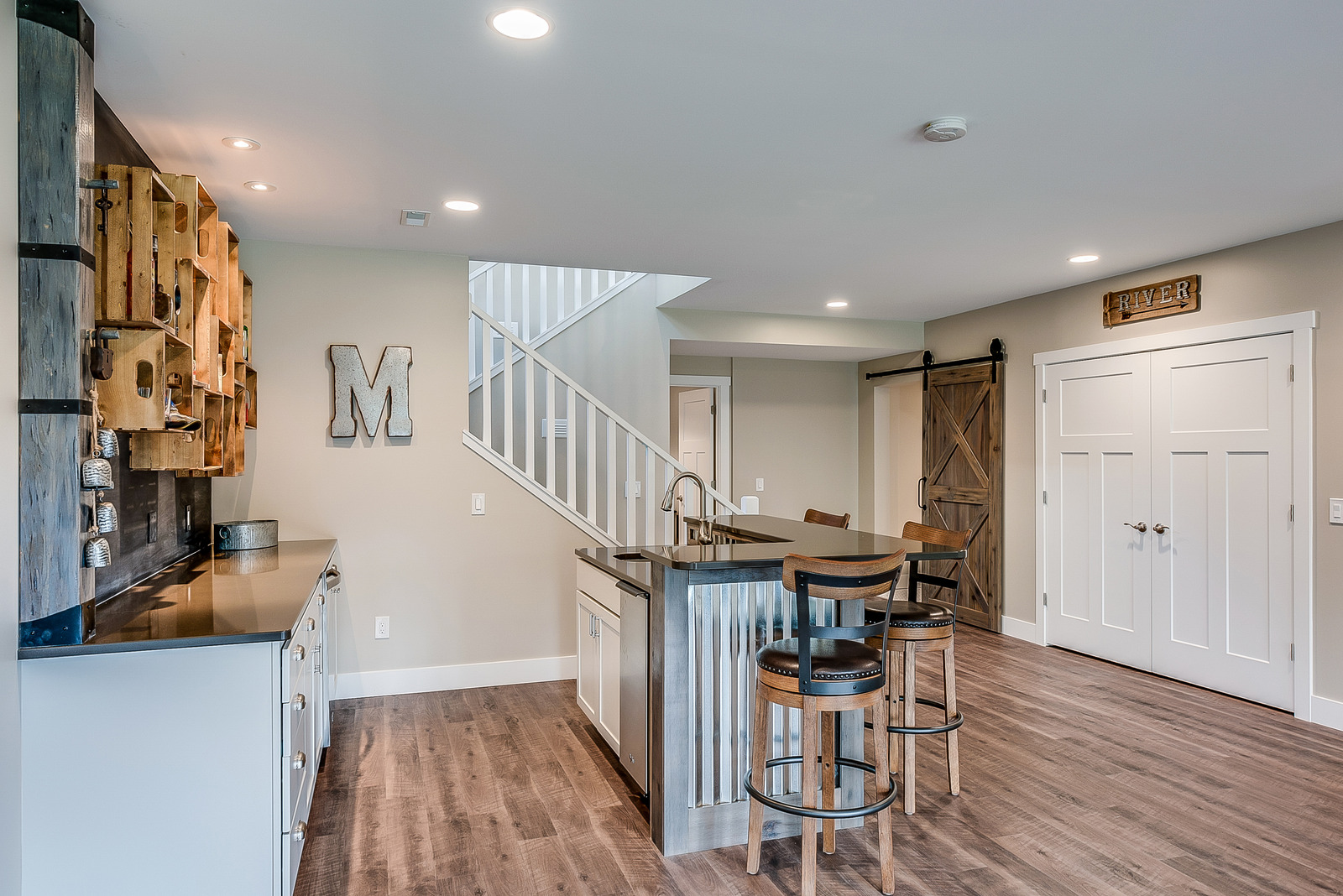
Stop Treating Your Basement Like a Storage Unit
Boxes. Old furniture. The treadmill nobody uses. That’s what most basements become. But small basement renovations done with some actual thought can turn that wasted square footage into the most useful room in the house. And unlike an addition, there’s no new foundation to pour. The space already exists. It just needs work.
Small basements are genuinely tricky, though. Cramped layouts punish bad decisions fast. A wall in the wrong spot, a ceiling fixture that hangs too low, storage that wasn’t planned in advance and suddenly the space feels worse than it did before the renovation started.
What follows are basement remodeling ideas grounded in what actually works not what looks good in a design mood board. Layout strategies, honest cost numbers, Ottawa-specific considerations, and a few things most contractors won’t volunteer unless asked.
Read the Space Before Touching Anything
Ceiling height first. Under seven feet and the options shrink considerably: no bulkheads, no drop ceilings, no surface-mounted fixtures. Seven to eight feet is the workable sweet spot most Ottawa homes fall into. Over eight feet is genuinely comfortable and opens things up significantly.
Moisture next. And be honest here. A faint musty smell, white powder on the concrete walls, old watermarks on the floor these aren’t things to paint over and hope for the best. They’re symptoms of water movement that will destroy a finished basement if left unaddressed. Deal with it before the drywall goes up, not after.
Then figure out where the mechanicals live: furnace, water heater, electrical panel, main drains. None of that moves cheaply. Good small basement design treats these as fixed anchors and builds the layout around them. The furnace room becomes its own zone. The main beam dictates where the open area starts. Work with the bones, not against them. After all, the constraints are just the design brief. Every tight basement has a good solution, it just takes some patience to find it.
Layout Is Everything Down Here
Basement layout optimization is where most small-space renovations either succeed or fall apart. The instinct is to carve things up a room here, a room there, close it all off. In a small basement, that instinct is usually wrong.
Walls eat square footage. And in 500 or 600 square feet, there isn’t much to spare.
Open layouts consistently outperform divided ones in compact basements:
- Natural light, what little exists travels through the whole space instead of getting trapped in a closed room
- The area feels bigger than it measures because sightlines run further
- Zones can share furniture a sectional defines the TV area without needing a partition
- Less framing means lower labour cost, which matters when the budget is tight
When some separation is genuinely needed a guest sleeping area, a home office, partial walls, open shelving used as dividers, or sliding barn doors work well. They create a sense of separation without actually closing the space off.
And vertical space. Always. Floor-to-ceiling shelving around columns, wall-mounted storage, overhead track lighting instead of table lamps. In a small basement, height is often more available than floor area. Space-saving renovation ideas almost always involve going up, not out.
What Actually Works in Tight Spaces
Specific ideas that show up again and again in well-executed small basement projects:
Built-ins around everything awkward. Columns, the space under stairs, the weird alcove where the old sump used to be. Custom built-ins turn problem spots into storage. It’s almost always worth the cost.
Light finishes, full stop. White walls, pale flooring, painted ceiling in a low-ceiling basement with limited natural light, dark finishes make the space feel underground. Because it is underground. Fight that instinct with light.
Recessed pot lights, not surface fixtures. Headroom is too valuable to lose to a fixture hanging down six inches. Recessed lighting preserves every inch of ceiling clearance and spreads light evenly. Well worth the extra electrical work.
Murphy beds for basement bedrooms. A queen Murphy bed with flanking shelves uses about 20 square feet when folded up. A standard bed frame uses the same space permanently, 24 hours a day. The trade-off is obvious.
Egress windows wherever the budget stretches. Required for legal bedrooms, yes. But even in non-bedroom spaces, a proper egress window brings in natural light that changes how the whole basement feels. It’s one of those upgrades that costs real money and is immediately obvious why.
Match the Design to the Purpose
What the basement is actually for changes every decision downstream. A few use cases worth thinking through:
Home office. Quiet, cool, away from main-floor noise basements actually make decent offices. The priorities are task lighting, acoustic insulation in the ceiling (helps more than most people expect), and enough dedicated outlets. Not a complicated renovation. Often a very effective one.
Kids’ playroom or rec room. Durable flooring above everything else LVP or polished concrete, not carpet. Carpets in a kids’ basement are a maintenance nightmare. Built-in storage around the perimeter keeps the middle of the room clear. Washable paint everywhere.
Home gym. Rubber flooring, some mirror panels, and ceiling-mounted storage for equipment that isn’t in use. Basements run cool, which most people exercising actually prefer. Low-frills renovation with high daily utility.
Secondary suite. The most involved project and the highest-return one. Proper egress, a bathroom, a kitchenette, separate entry if the layout supports it. Basement finishing Ottawa contractors regularly cite secondary suites as the project that adds the most dollar value both for rental income while you’re there and at resale.
Real Numbers on Basement Renovation Cost
Let’s be direct about basement renovation costs in the Ottawa market. A straightforward basement finishing insulation, drywall, flooring, pot lights, no bathroom runs roughly $25,000 to $45,000 for a typical 600–800 square foot space. That’s not a lowball estimate and it’s not padded. That’s what qualified contractors charge to do it right. Add a bathroom and the number jumps $10,000 to $20,000 depending on the fixtures. A full secondary suite with kitchenette and egress windows can push past $80,000.
For genuinely small basements under 500 square feet total cost comes down but the per-square-foot number often runs higher. Permit fees, rough-ins, and structural work don’t scale down proportionally with square footage. Fixed costs are fixed. Where to spend: waterproofing, subfloor system, insulation, lighting. Where to save: fixtures, hardware, cosmetic finishes. The first list is the stuff that fails expensively if done cheap. The second list can be upgraded later without tearing anything out. Remodeling Magazine’s Cost vs. Value data puts finished basement ROI at roughly 70–75% in most Canadian markets. In Ottawa, where usable square footage commands a real premium, that return tends to run on the higher end.
Ottawa-Specific Things Worth Knowing
Basement finishing Ottawa projects have some local wrinkles that don’t come up in generic renovation guides. Climate, for one. Ottawa winters are brutal and the freeze-thaw cycling puts real pressure on foundation walls. Spray foam insulation costs more than batt but handles thermal bridging and air sealing in a way that batt simply doesn’t in a below-grade application. Most experienced Ottawa contractors recommend it for exterior basement walls. The payback in heating costs and moisture control is real.
Permits are enforced here. A finished basement with a bedroom requires a proper egress window and smoke and CO detection per Ontario Building Code. Secondary suites have a separate set of requirements. Skipping permits to save a few thousand dollars is a common mistake; it creates problems at resale and with insurers that cost more to fix than the permits would have. Ottawa’s housing stock varies a lot by neighbourhood. Barrhaven, Kanata, and Orleans homes often have eight-foot ceilings and decent footprints in genuinely workable basements. Older Westboro or Glebe homes can have six-and-a-half-foot ceilings and rubble stone foundations, which are a different kind of project entirely. Know what you’re working with before getting quotes. Basement remodeling ideas that work in one neighbourhood may not translate to another.
Frequently Asked Questions
What is the best layout for a small basement?
Open plan, almost without exception. Walls eat square footage a small basement can't afford to lose. Use furniture placement, partial walls, or sliding doors to define zones TV area, workspace, sleep area without closing off the space. Built-ins around columns and stairs reclaim square footage that usually just goes to waste.
How much does a basement renovation cost in Ottawa?
A basic finished basement in Ottawa insulation, drywall, flooring, lighting, no bathroom typically costs $25,000 to $45,000 for a 600–800 sq ft space. Add a bathroom and budget another $10,000–$20,000. A full secondary suite with a kitchenette can exceed $80,000. Spray foam, egress windows, and permit fees are common Ottawa cost drivers.
What adds the most value to a basement renovation?
A legal secondary suite delivers the highest return in Ottawa's market rental income plus strong resale appeal. A finished rec room or home office adds meaningful value too. Waterproofing and proper insulation aren't exciting but protect everything else. Buyers notice moisture problems immediately. Getting that right first makes everything above it worth more.
